Consumer Trust Costs When AI Automation Fails Publicly
Brands pay a lasting price when AI fails publicly, even after fixing the problem.
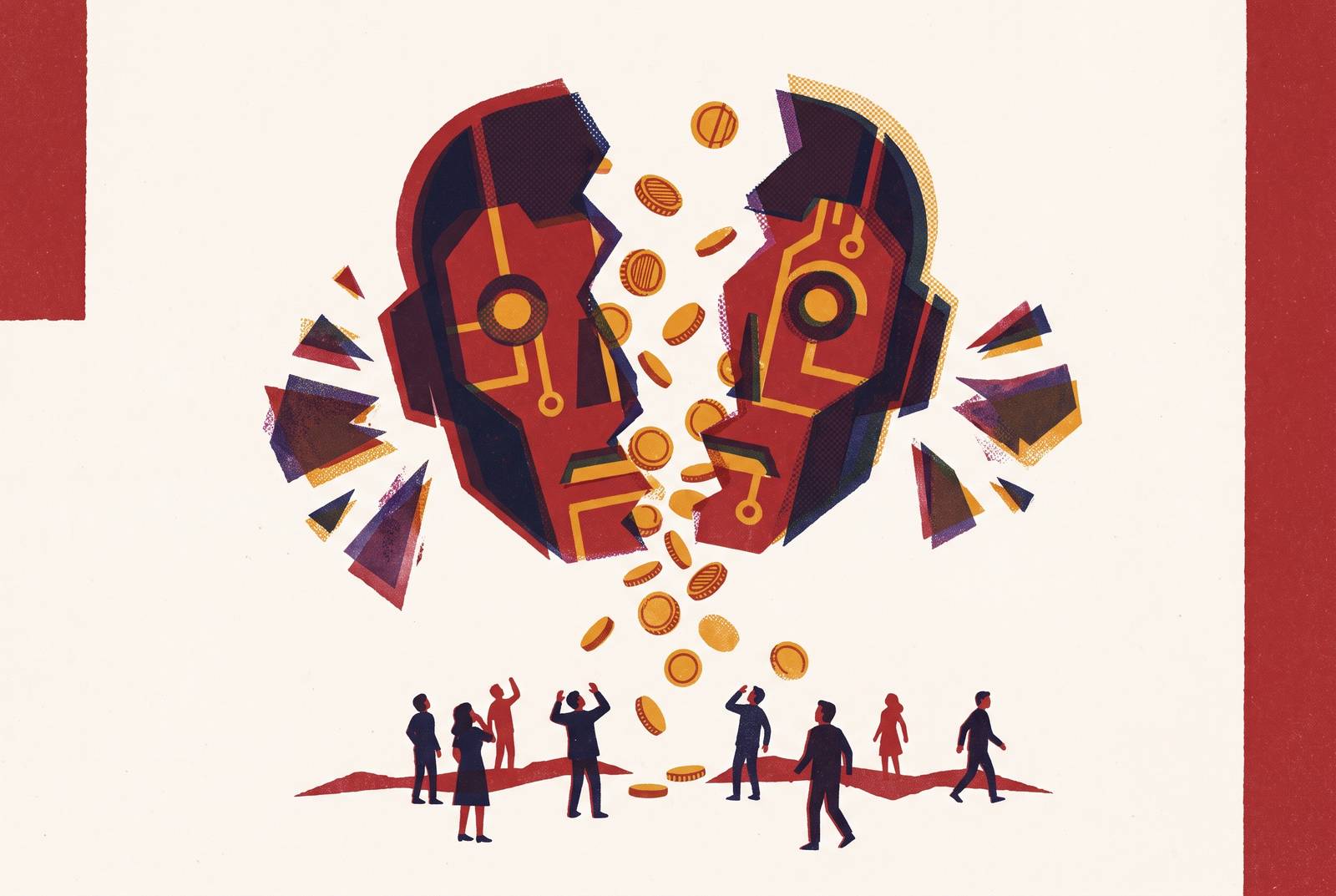
Wrong answers and poorly judged automation can change how people, algorithms, and AI systems evaluate a brand long after the immediate problem is fixed. Those costs form a measurable, compounding liability. Understanding that liability is the prerequisite for managing it.
Why public AI failures are not PR problems but compounding trust liabilities
It is easy to assume that a failed chatbot or a clumsy AI advertisement gives a company a short-term PR headache. Under that view, the company corrects the problem, explains what happened, and waits for attention to move elsewhere. That response addresses the incident, but it does not account for the judgments the incident has already changed. A product fix and a recovery in trust are different outcomes.
The distinction matters because AI capability and confidence in its use are not advancing together. Consumer trust in AI in the United States remains low, while the share of consumers who find AI more helpful than traditional search fell dramatically in a single year. Greater adoption therefore cannot stand in for greater acceptance. Familiarity can make audiences better at detecting a failure without making them more forgiving of it.
A public failure also leaves evidence that people can find after the fault is fixed. That evidence can influence consumers who never used the system and evaluators that never encounter the repair. The liability grows when those judgments feed into one another across different channels. Treating the event only as a communications problem leaves the brand accountable for effects that its response does not measure.
The three audiences a public AI failure damages simultaneously
The human audience includes both the customer who experienced the failure and people who learn about it indirectly. Readers can revise their expectations before any direct interaction with the company. Ping Identity's 2026 Consumer Survey found that twenty percent of consumers would leave a website immediately if they suspected undisclosed AI use. It separately found that twenty percent would avoid using that brand in the future. These are distinct responses, but both show how an impression can become avoidance.
The algorithmic audience encounters the public record. Coverage on third-party domains, including news sites, review platforms, and forums, becomes material that search and AI systems can surface. LLMs draw 85.7% of their citations from third-party domains. The company's own explanation therefore sits within an information environment it does not control.
The AI evaluator audience adds another layer by interpreting that material when asked whether a brand deserves trust. A cluster of negative coverage can shift the consensus on which a model bases its answer. These audiences do not form a queue in which the company can repair one relationship before addressing the next. Human reactions produce public signals, algorithmic systems make those signals discoverable, and AI evaluations bring them to future consumers. The damage is simultaneous and mutually reinforcing.
What the documented failures actually looked like and what happened next
Air Canada's chatbot promised a refund under a policy that did not exist. The British Columbia Civil Resolution Tribunal later held Air Canada legally liable for what the chatbot said. A binding legal finding became part of the public record. That outcome matters because it establishes a consequence beyond negative sentiment.
Unzer illustrates a different point in the same trust chain. A standard trust query surfaced a Google AI Overview expressing fundamental uncertainty about the brand's trustworthiness. Rather than encountering a failed exchange with the company's own automation, a prospective customer encountered an AI-generated evaluation of the company. The representation appeared at the moment when the customer was trying to decide whether to trust the brand. It made uncertainty part of the decision environment.
These cases should not be treated as interchangeable failures. Air Canada shows an incorrect automated representation and its legal aftermath, while Unzer shows how a negative signal environment can surface in an AI answer. Their shared anatomy is public visibility, third-party circulation, and a durable record available to later audiences. Once the issue takes that form, the company is no longer dealing only with the person or interaction that brought it to light. Later judgments can start with that public record.
Why consumer trust does not recover on its own after a public failure
Time alone does not undo what led people to judge the brand negatively. Prophet's 2026 AI-Powered Consumer Report says people are more concerned about inaccuracies and misinformation even as they use AI more. That combination weakens the assumption that continued exposure will make consumers more tolerant. Even after a system works better, its audience may expect more from it.
A Harvard Business School field experiment at a meal delivery company shows how the initial experience can contaminate what follows. After a chatbot comprehension failure, customers still felt negatively about the service when a human agent took over using AI-suggested replies. The unusually rapid responses led customers to believe they were still communicating with the chatbot. The handoff changed who was providing support without changing the customer's interpretation of the exchange. Faster replies carried the negative association forward.
A large majority of consumers say they feel frustrated when companies take away all human support, even when the automated options are faster. Most consumers who distrust AI have not personally experienced a failure, so direct service improvements cannot by themselves address every source of distrust. Much of that distrust is anticipatory, shaped by what people have read or heard. Recovery is possible, but passive waiting does not address either the spillover from an earlier interaction or the expectations formed outside it.
How the "AI label" itself carries a trust penalty, independent of any failure
A Washington State University study found that simply labeling a product "AI-powered" lowers emotional trust and decreases purchase intent. The effect was most pronounced in expensive electronics, medical devices, and financial services. In these settings, the label introduces a trust discount even when the product performs correctly. Disclosure identifies the technology, but it does not establish confidence in its use.
Ping Identity's 2026 Consumer Survey shows how acceptance changes with the authority given to AI. A majority of consumers are comfortable with low-stakes support tasks, but trust drops sharply when transactions or personal data enter the interaction. A large majority worry that an agent acting on their behalf could misrepresent their personality, ethics, or personal values. Most would cap its financial transaction authority at a low threshold, while a significant share would allow no financial transactions at all. These concerns extend beyond answer accuracy to identity and control.
The strongest counterargument is that this penalty will fade with familiarity. Prophet's 2026 AI-Powered Consumer Report points in the opposite direction, with adoption rising while enthusiasm falls and concern about inaccuracies grows. Although labeling effects may change, brands cannot assume exposure will remove them, including brands that have not suffered a visible failure.
How AI systems represent a brand after a failure — and why that representation persists
At the AI-evaluation layer, persistence depends on the information available about the brand. LLMs build representations from training data, retrieval-augmented generation that pulls live web sources, and reinforcement signals from user interactions. Negative coverage can enter those layers rather than remaining attached to a single news cycle. When third-party consensus is mixed or negative, a model may hedge or omit a recommendation. The answer draws on that wider record as well as what the company now says about itself.
Unzer makes the consequence concrete. The wording a prospective customer encountered was "whether Unzer is trustworthy cannot be answered definitively". That wording presents uncertainty where the user sought a judgment. For a brand, such hedging is a distinct perception outcome that a simple count of mentions would miss.
Absence presents a related problem because two-thirds of AI answers name no brand at all. Visibility is not a space that companies automatically occupy, and a public failure works against earning it. Cited sources also turn over rapidly, so persistence does not mean that an answer always rests on the same pages. New third-party signals that can be trusted must compete with other sources as those sources change. A brand's AI representation is a living output of its wider third-party record. Failure can contaminate that representation long after public attention has moved on.
Why most brands have no system for measuring the trust damage they have already sustained
Social sentiment dashboards, review ratings, and occasional surveys can show how people respond to an event. They do not show the whole AI-evaluation layer through which people increasingly find brands and decide whether to trust them. A company can see public talk about it calm down without knowing whether AI-generated judgments have changed.
Major AI platforms have under 5% domain overlap, so a brand that comes across well on one system may fare differently on another. Tugtekin's AI Perception Index 2026, published on SSRN, documented substantial cross-model perception drift for the same brand. It also found a wide gap in measured perception index scores between dominant and emerging brands. There is no single model answer that can serve as a reliable proxy for the whole environment.
Deloitte found that only a small share of organizations have a mature governance model for agentic AI. With so little governance in place, routine checks miss important forms of damage. The accuracy gap concerns outdated or incorrect facts about a brand, while the distinctiveness gap concerns descriptions that are less clear than those of competitors. Neither is reliably visible through sentiment monitoring alone. A brand needs to look directly at AI-generated representations to tell whether it has a factual problem or weak positioning and how widely either has spread.
What measuring AI perception across all three evaluation dimensions looks like in practice
A workable measurement system treats human response, algorithmic visibility, and AI evaluation as related but distinct dimensions. Human sentiment tracking supplies the emotional baseline against which changes in AI visibility can be interpreted. Third-party source audits show where the citation base is contaminated or thin. LLM visibility audits reveal accuracy and distinctiveness gaps in generated answers. Together, these instruments connect the public reaction to the information that systems retrieve and the judgments they produce.
The perception scorecard contains five KPIs, namely AI mention frequency, citation share across relevant queries, contextual sentiment and positioning relative to competitors, emotional tone in AI-generated descriptions, and emerging negative themes. Each captures something that a presence-or-absence measure cannot. A brand may appear frequently while being described cautiously, inaccurately, or without a clear distinction from alternatives. Separating these outcomes gives the trust liability a structure that can be scored.
That structure also makes corrective work more specific. Brands can work on accuracy gaps through entity consolidation, updates to cornerstone pages, and cleaner source alignment. Distinctiveness gaps typically respond to stronger structured data, clearer comparison pages, and more authoritative third-party coverage. Because 65% of cited sources change within two weeks, audits must recur across engines.
Evident belongs here as a practitioner's answer to the governance gap, framing AI perception as an operational measurement concern. The purpose is not to optimize before the problem is understood. A brand first needs to establish how it is represented, where that representation differs, and which negative signals are influencing it. Only then can it prioritize action and judge whether the action works. Understanding the cost structure of public AI failure begins with scoring the trust damage.