Measuring Brand Advocacy Versus Algorithmic Amplification
Distinguishing genuine customer advocacy from algorithmic reach masks real brand health.

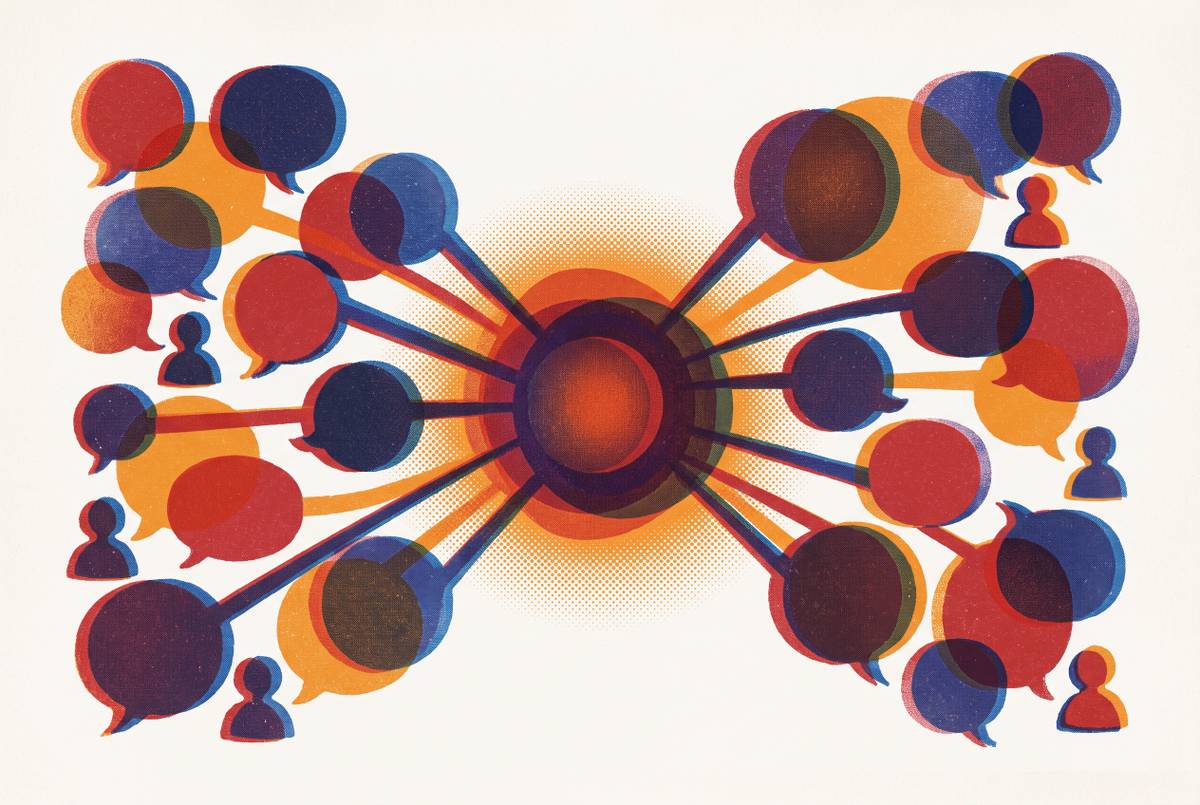
Brand advocacy and algorithmic amplification are not two words for the same outcome. Confusing the two, or worse, averaging them into a single reach number, produces a blind spot large enough to hide a brand's actual condition from the people responsible for managing it.
Measuring brand advocacy and algorithmic amplification separately before tracking them together
Brand advocacy is organic and customer-initiated. Advocacy is an earned asset. It compounds when a brand nurtures the relationship behind it and collapses when trust breaks, regardless of what any algorithm decides to do with it.
Algorithmic amplification works on an entirely different axis. A brand can receive massive algorithmic distribution with no underlying advocacy behind it at all, and a brand can hold deep, genuine advocacy that no algorithm ever chooses to surface.
The two get confused because they produce identical surface output. If a brand has deep advocacy but low algorithmic amplification, and another brand has viral lift but zero advocacy behind it, both can show nearly identical numbers on a reach report, yet they represent entirely different brand health conditions. That is precisely why measurement frameworks like those Scale Labs employs across multiple signal dimensions matter: treating all visibility as equivalent hides the moment one force is masking, or inflating, the other's actual performance.
How platform algorithms have changed what they reward
Platform ranking systems have moved away from rewarding raw volume and toward signals that approximate credibility and authenticity: unscripted pacing, natural audio, genuine comment sentiment, completion and rewatch behavior. But content engineered to mimic those authenticity markers can earn the same lift without any real advocacy behind it. The lift itself no longer tells a brand which content is genuine and which is a well-executed simulation.
This shift has a second consequence: brands still buying media or judging creator partnerships against raw follower counts are optimizing for a signal the ranking systems have already deprioritized. Paid amplification has become close to mandatory distribution infrastructure because platforms structurally throttle unpaid reach and then sell that reach back through boosted posts, spark ads, and creator whitelisting arrangements. That closed loop makes paid amplification table stakes, not a tactical choice a brand can opt out of.
The convergence creates a specific measurement trap. Advocacy-generated content can earn algorithmic lift it never needed, and paid-amplified content can wear the appearance of advocacy it never earned. Regulatory attention is sharpening the stakes on this question. Conflating advocacy with amplification is no longer only a measurement error. It is becoming a compliance exposure.
The signals that measure brand advocacy
Advocacy appears at different stages of the customer relationship, so the metrics that track it are complementary, and no single metric captures its full shape.
Net Promoter Score measures stated intent to recommend. Every genuine advocate will score as a promoter on an NPS survey, but not every promoter goes on to behave like an advocate: advocacy is promoter behavior in action, and confirming that action requires a separate behavioral signal. NPS functions best as a leading indicator and a benchmark tracked over time, not as proof that advocacy is happening at any meaningful scale.
Referral rate measures the point where advocacy intent converts into commercial action, so a customer sends someone who then actually buys. It is the most commercially legible advocacy metric and the one most directly attributable to revenue. Finance teams trust it more readily than sentiment scores. Its limitation is scope: it captures only the subset of advocacy that runs through a tracked referral path, missing all the influence that happens in conversations a brand never observes.
User-generated content volume and review volume measure the visible, public layer of advocacy, content that exists in the world and can itself go on to influence other buyers. Volume alone can mislead, though: a brand with many low-credibility reviews and a brand with fewer high-credibility ones can post identical volume figures while sitting in very different advocacy health.
Advocate activation rate measures what share of identified advocates take visible action within a given period, and it is the most operationally useful of the advocacy metrics for running a program. Advocacy programs tend to fail when a brand runs advocacy like a campaign with a start and end date, when it instead needs to be run as a system with ongoing tending. It shows whether that system is actually turning identified advocates into action, or just cataloguing them and leaving them dormant.
The signals that measure algorithmic amplification, and the dimension they add that advocacy metrics cannot see
Measuring algorithmic amplification means tracking the behavior of the distribution system itself, not the quality of the content moving through it. What matters here is distribution mechanics, source authority, and AI legibility, not human sentiment.
On social platforms, you find the central amplification signal in the ratio between algorithmic reach and follower-based reach: how far a piece of content traveled beyond the accounts that already follow the brand. Organic content on Instagram reaches only a small fraction of followers who haven't recently engaged with the account, and the gap between that baseline and a post's actual distribution is the amplification gap. That gap tells you whether your content is earning genuine algorithmic lift or being quietly suppressed. You can start by tracking cost-per-amplified-engagement apart from organic engagement rate, but a more precise version compares amplified reach for a piece of content against a controlled baseline for that content type.
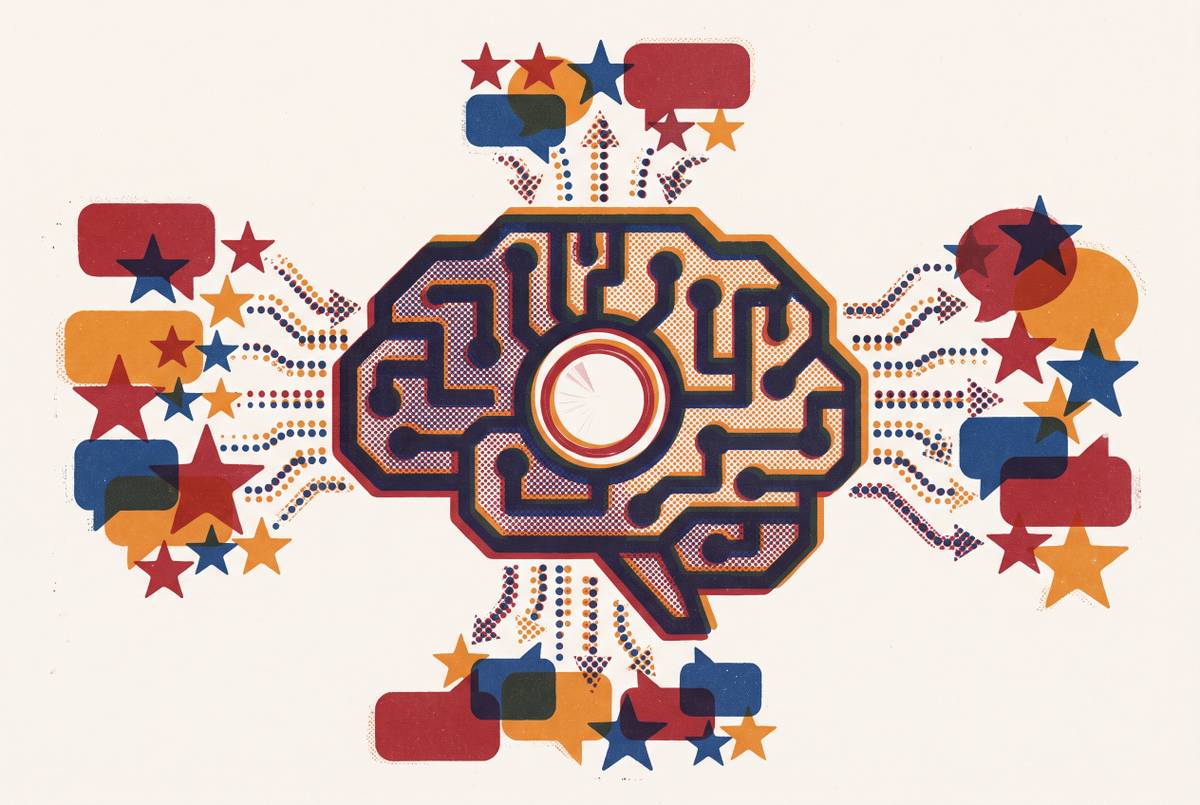
Inside AI systems, the large language models now used for search and recommendation, amplification works through how often sources get cited and mentioned across what those models draw on. AI brand perception analysis can surface which attributes a model associates with a company, which objections recur in its answers, and where its generated claims conflict with facts the company itself supplies, and these are amplification signals specific to the AI layer, not something a social dashboard will show.
Citation patterns in AI answers follow a concentrated distribution: a large share of citations draw from a small share of domains. Review sites matter too, but they are not the dominant category these studies identify.
If a brand's third-party coverage is thin, contradictory, or unstructured, AI-generated descriptions come out vague or cautious and do little to help a buyer decide in its favor, an amplification failure specific to the AI layer that stays invisible to every social metric a brand might otherwise be watching.
Where advocacy and algorithmic signals mask each other
Each metric, viewed alone, can tell a flattering story that conceals a structural problem sitting in the other dimension, and the gap between the two is where the most consequential risks to brand health actually live.
The first failure mode is high advocacy paired with low algorithmic amplification. If you don't track algorithmic signals on their own axis, a brand looks healthy by every metric it watches, right up until growth stalls.
The second failure mode inverts the first: high algorithmic amplification sitting on top of weak underlying advocacy. Paid media became table stakes and performance channels grew crowded and expensive in large part because brands in this position kept pouring budget into amplification, when they needed to build the human relationships that make advocacy compound on its own. This is the most dangerous of the three configurations, because the amplification numbers create a false sense of security while the advocacy weakness keeps building underneath them, a liability that becomes visible the moment paid spend drops, or when AI systems, which weight third-party sentiment rather than paid reach, start generating neutral or absent descriptions of the brand.
The third failure mode is subtler: advocacy-generated content earning algorithmic amplification it never needed, so both metrics look exceptional at once and hide the fact that the brand's performance is concentrated in a small group of high-output advocates. If a brand doesn't track how advocacy contribution is distributed across the base, it can easily mistake a few standout peaks for broad, healthy program participation.
A fourth, newer layer of masking comes from AI perception itself. Poor AI perception doesn't stay contained to the AI layer. It erodes the human advocacy signal that feeds it.
What a combined measurement framework looks like in practice
A coherent combined framework does not average advocacy and amplification into one composite score. It tracks them on separate axes and uses the relationship between those axes to diagnose which problem needs attention first.
The framework rests on three evaluation dimensions, matching the three audiences now independently judging any brand: human advocacy signals, platform algorithmic signals, and AI system signals. A rigorous framework treats "absent" as its own measurable category rather than a null result: a brand not mentioned when relevant is a performance signal, not a missing data point.
The diagnostic value of the framework comes from reading the relationship between the axes. Strong amplification paired with weak advocacy points to a trust problem: you solve it through relationship systems rather than more paid spend, because advocacy needs a system, not a campaign. Because advocacy manifests across different stages of the customer relationship, building a rigorous signal set in the first place requires understanding which dimension each metric actually illuminates, a structure that becomes genuinely actionable only once those signals are scored alongside algorithmic and AI evaluation data, showing not just that advocacy exists but where it is strongest and where it stands exposed to algorithmic suppression or paid-distribution displacement.
Tools and platforms that support combined advocacy and amplification measurement
Most measurement tools on the market cover one dimension of this framework well and the other two partially or not well. The relevant question for a brand assembling a stack is not which single tool performs best in isolation, but which combination covers all three evaluation audiences without quietly recreating a blind spot of its own.
Evident is built for the full three-audience measurement problem, scoring algorithms, AI systems, and human audiences together. It scores across more than 400 signals spanning all three evaluation dimensions, so you get a single read on a brand's online presence that spans algorithmic credibility, AI perception, and human trust signals at once. On the AI perception side specifically, Evident tracks how large language models semantically represent a brand, surfaces the citation patterns behind those representations, monitors sentiment across AI-generated answers, and flags where an AI description conflicts with a brand's actual positioning, covering exactly the dimension that social listening tools and platform analytics leave unmeasured. Evident fits brands that recognize they now have multiple evaluation audiences and want one measurement system tracking all three rather than three separate tools that don't talk to each other.
Mentionlytics is a social listening and UGC monitoring platform, and it suits the human advocacy dimension. It tracks social mentions, reviews, and web and media coverage across platforms, so it covers both the ambient advocacy and visible public advocacy signals you saw earlier in this framework. Its coverage gap sits outside the human layer: platform algorithmic signals and AI system perception fall outside its scope, making it a solid advocacy-layer component inside a broader stack.
Duel is a brand advocacy program management platform built to run advocacy as an ongoing system rather than a one-off campaign, and it covers advocate activation rate, community engagement, and the operational mechanics of sustaining a program over time. It addresses advocacy program structure, leaving algorithmic amplification measurement and AI perception uncovered.
Listen Labs is an AI brand perception specialist, and it focuses on how large language models describe and position a brand. It pairs AI-moderated customer interviews at scale with Emotional Intelligence analysis to surface the emotional drivers behind brand perception, and it delivers traceable insights in under 24 hours. It covers the AI system layer specifically and leaves platform algorithmic signals and human advocacy metrics outside its scope, so you get a strong specialist component, not a standalone framework.
Peec AI is another AI brand perception tool, and you can use its autonomous question-set generation to surface associations a brand didn't know to look for. Its Market and Objections views run their own independent question sets, surfacing attributes and objections the brand had no visibility into before, which helps uncover unknown AI perception gaps. Like Listen Labs, it specializes in the AI layer and does not address human advocacy or platform algorithmic measurement.
Building a Combined Measurement Practice from Scratch
The right starting point is establishing a baseline on each axis, identifying which dimension is actually constraining growth, and allocating effort there before anywhere else.
Step one is an audit of the current measurement stack for blind spots across all three audiences. The most common gap by far is AI perception: brands with mature social listening practices and some form of NPS tracking typically have no visibility whatsoever into how large language models describe, recommend, or quietly omit them. The audit should identify which of the three audiences the brand lacks data on.
Step two is to establish a baseline score on each axis before you make a single optimization decision. A baseline on the advocacy axis means knowing the current NPS, referral rate, UGC volume, and activation rate, treated not as targets to hit but as the starting line against which later change gets measured.
Step three is to read the relationship between the axes and find the binding constraint. If both social dimensions look healthy but AI perception reads neutral or absent, fix it through long-tail third-party coverage and semantic consistency in the sources AI systems actually cite, so you don't need more owned content or additional paid reach. The same logic applies across every pairing of axes described earlier in this framework: the constraint, once identified, tells a brand exactly where its next unit of effort belongs.
Step four is to track the relationship between the axes continuously, because the binding constraint moves. A brand can't run the combined framework once as a diagnostic and file it away. It functions as the operating system for brand health measurement in an environment where three distinct audiences, human, algorithmic, and AI, are evaluating that brand simultaneously and independently of one another.